
News
Cascade’s Food Rescue Rides Expand to Bellevue
•
- Cascade’s Pedaling Relief Project is expanding to Bellevue thanks to a new partnership with Hopelink Bellevue Market.
- Pedaling Relief Project is a national model for cities seeking to reduce waste, traffic congestion and climate pollution.

Paul Tolmé

Cascade Bicycle Club’s acclaimed Pedaling Relief Project, which rescues and delivers food by bicycle on behalf of multiple Seattle food banks, is now expanding to Bellevue thanks to a partnership with Hopelink Bellevue Market.
The partnership with Hopelink kicks off with a food rescue ride on April 16.
“This is an exciting new chapter for the Pedaling Relief Project as we expand outside of Seattle to the Eastside,” says Landon Coates Welsh, who manages the Pedaling Relief Project for Cascade.
Begun in 2020 when food banks experienced a crisis of need due to the pandemic, the Pedaling Relief Project organizes volunteers who use bicycles and electric bikes pulling trailers to rescue food from groceries and farmers’ markets.
By using bikes instead of motor vehicles, Pedaling Relief reduces traffic congestion and air pollution while also cutting greenhouse gas emissions.
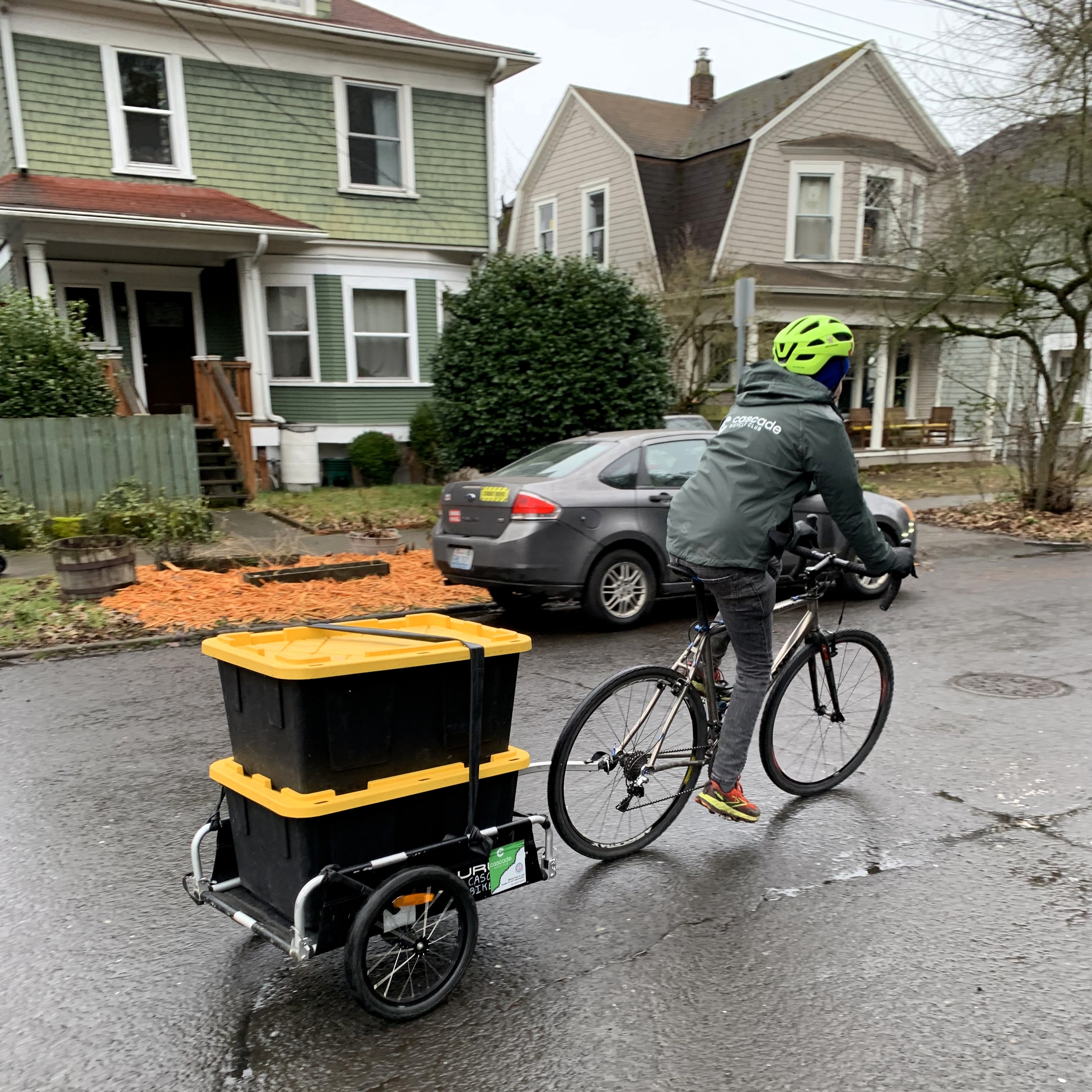
Pedaling Relief volunteers have biked more than 1.7 million pounds of food and goods over the past six years.
Volunteer for the Hopelink Bellevue Ride
Cascade seeks volunteers for the new weekly Bellevue rides, which will take place on Thursdays at 9:30 a.m. starting on April 16. Time spent riding with PRP can be redeemed for rewards from Cascade including paid ride registrations, classes and membership fees.
“We will ride as a group from Hopelink to local grocery stores where we will rescue food that would otherwise be discarded, load it onto our cargo bikes and trailers, and then pedal it back to Hopelink, where it will be available for their clients,” Welsh says.
The ride will take approximately 90 minutes, with an optional coffee social afterward. See more details and sign up here.
“As with all PRP rides, all you need to bring is your bike and a helmet. We have loaner trailers available for hauling the rescued items," Welsh says.
Hopelink requires a background check for volunteers. After signing up, volunteers will get an email with a link and instructions on how to complete the simple check.
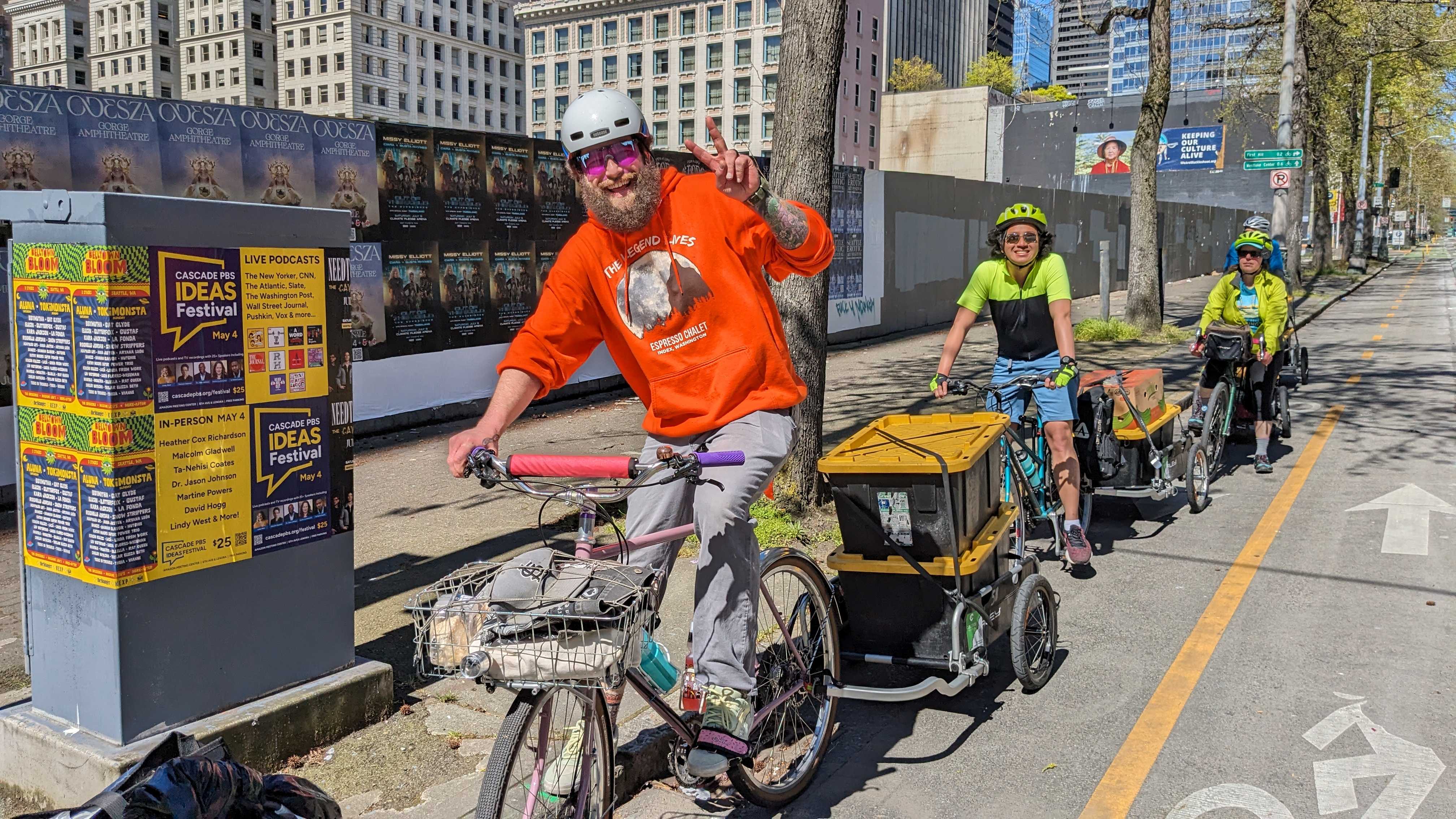
Serving Community while Biking
Pedaling Relief food rescue and delivery rides are a great way for volunteers to get exercise, explore new neighborhoods, make like-minded friends, and help food banks and their clients who have been hit by federal budget cuts. Cascade provides volunteers with bike trailers that can be attached to just about any bike.
Cascade Executive Director Lee Lambert calls the Pedaling Relief Project "the largest bicycle-powered food rescue and transport effort of its kind in the country" and “a national model for how cities can partner with bike nonprofits and food banks to address food insecurity and reduce waste.”
The University of Washington's prestigious Urban Freight Lab included the Pedaling Relief Project in its research paper "Biking the Goods," which presents the Cascade initiative as an example of how cargo bikes can be used to serve an important public need.
Learn and sign up for a food rescue or delivery.
Read our 2025 story: Seattle Awards Cascade $92,000 to Reduce Food Waste
Watch the King 5 story about Pedaling Relief Project:
Share this post

