
News
Pedaling Relief Project Celebrates a Bananas Achievement: Two Million Pounds of Food Hauled by Bike
•
- Cascade Bicycle Club’s Pedaling Relief Project is a national model for how bike nonprofits can partner with food banks and local governments to alleviate food insecurity, reduce food waste, cut climate pollution and perform a valuable community service.
- “It's neighbors helping neighbors with bikes.”

Paul Tolmé

As demand for food assistance skyrockets in Washington state and nationwide, Cascade Bicycle Club's award-winning Pedaling Relief Project is celebrating a huge milestone: two million pounds of food and essential goods transported by bike.
“The Pedaling Relief Project provides a model for how bike nonprofits nationally can partner with food banks and local governments to alleviate food insecurity, reduce food waste, cut climate pollution and perform a valuable community service,” says Landon Welsh, who oversees the program for Cascade.
On Wednesday (Nov. 4), Cascade and Byrd Barr Place held a community celebration at the Byrd Barr Place food bank in Seattle’s Central District to mark the milestone of two million pounds rescued and delivered on behalf of five Seattle area food banks.
Founded in 2020, the Pedaling Relief Project organizes eight weekly volunteer rides to supermarkets and groceries in Seattle and Bellevue to rescue food on behalf of Byrd Barr Place, the University District Food Bank, White Center Food Bank, Hopelink Bellevue Market, and Food Not Bombs.
Using nimble bike trailers attached to their bicycles, the volunteers load up bins of produce, bread, prepared sandwiches and other food and supplies that would otherwise go to waste and then pedal it back to the food banks.
Pedaling Relief volunteers also do home deliveries, serving food bank clients who, due to transportation challenges or health reasons, are unable to visit their local food bank in person.
“Using pedal power to deliver food to our community is an amazing model,” says Atiyeh Assaf, manager of the Byrd Barr Place food bank. “It’s neighbors helping neighbors with bikes.”
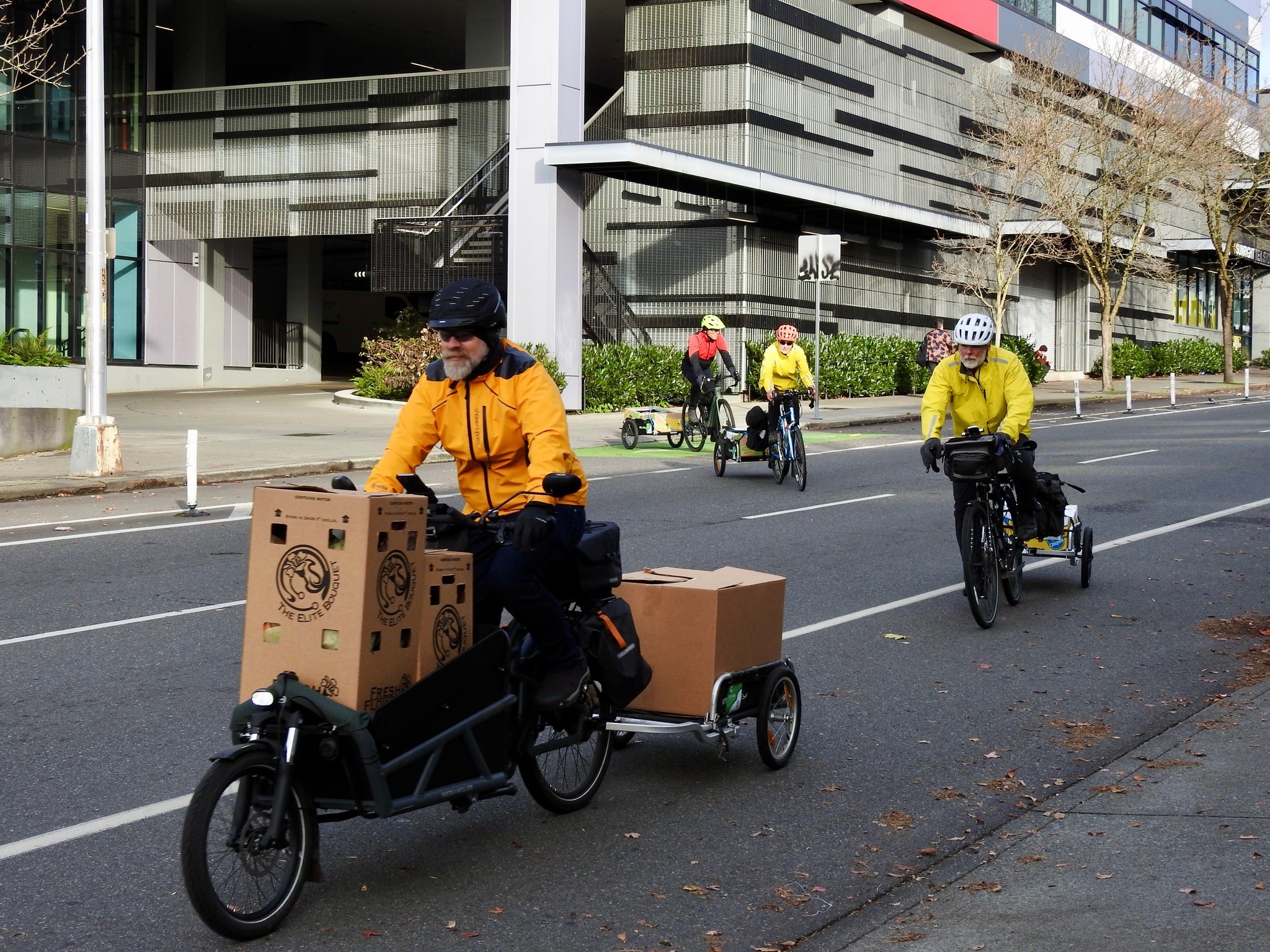
Pedaling Relief Project by the Numbers
- More than 100,000 miles pedaled
- 861 volunteer riders
- More than 21,000 total volunteer signups
- Approximately 3,400 rescue and delivery rides since 2020
- 40,000-plus homes served
Supporting Overburdened Food Banks
The Pedaling Relief Project milestone of two million pounds comes at a time of sharply rising food insecurity. Food banks in Seattle– and across the United States–are serving more people due to inflation, increased fuel prices, and cuts to federal food aid programs.
More than five million people nationwide have lost their Supplemental Nutrition Assistance Program (SNAP) benefits since the enactment of the One Big Beautiful Bill.
“We’ve seen an eighty percent increase in the number of families accessing the food bank on a weekly basis,” says Joe Gruber, executive director of Seattle’s University District Food Bank.
Biking the Goods and Combating Food Waste
Cascade Bicycle Club hopes to raise awareness of the Pedaling Relief Project because it is a model for how to move tons of goods through dense urban environments using non-polluting bicycles rather than motor vehicles.
“Bicycles don’t need parking, they can avoid traffic using bike lanes, and they can cover last-mile logistics that would otherwise be cumbersome for typical food bank vans,” says Welsh.
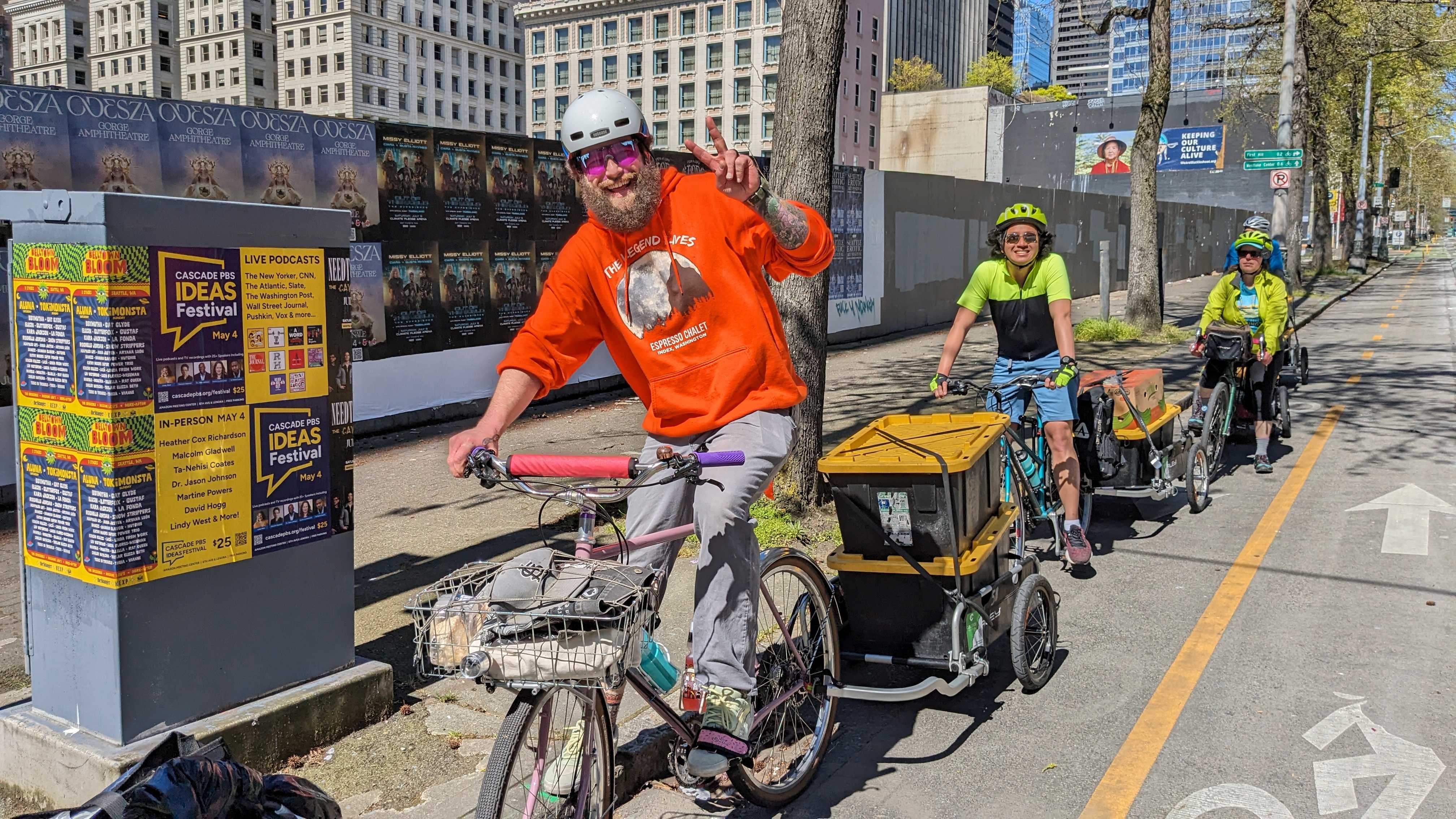
Approximately half of all the food produced in the United States ends up in the waste stream. By rescuing food that might go into landfills, Pedaling Relief Project is reducing climate pollution and showing the power of bicycles as tools for building stronger communities.
The University of Washington's prestigious Urban Freight Lab included the Pedaling Relief Project in its research paper "Biking the Goods," which presents the Cascade initiative as an example of how cargo bikes can be used to serve an important public need.
In 2025, the Pedaling Relief Project received awards from the Seattle Department of Neighborhoods and Seattle Public Utilities in recognition of the program’s important work.
Cascade Bicycle Club is now developing a Pedaling Relief Project toolkit to help other cities, nonprofits, food banks and bike advocacy groups create similar initiatives.
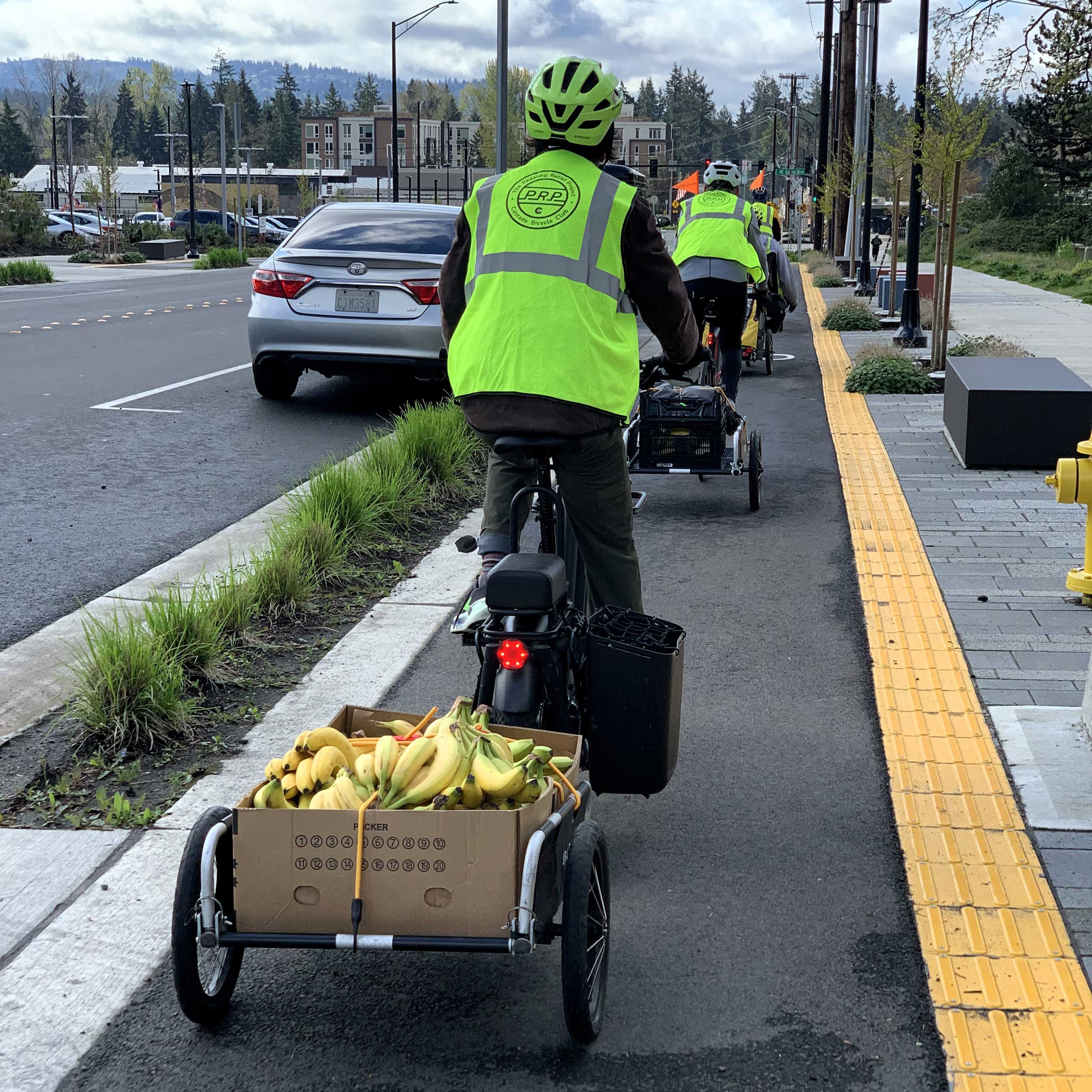
In Boulder, Colo., a program called Boulder Food Rescue also uses bikes to collect and deliver food to residents in need of nutritional assistance.
People in Seattle, Bellevue and King County who want to help can sign up for a grocery rescue or home delivery on the Pedaling Relief Project landing page.
Learn more about the Pedaling Relief Project in this Cascade video on Youtube.
Share this post

